









Figma, in the final quarter of fiscal year 2025, exceeded the expectations of analysts surveyed by London Stock Exchange Group (LSEG) across all key metrics, with revenues, according to official data, reaching 303.8 million USD, representing an impressive year-on-year increase of 40 percent. Although the company reported a net loss of 226.6 million USD, investors focused on robust growth and an exceptionally ambitious outlook for 2026. Figma forecasts full-year revenues of up to 1.37 billion USD, significantly exceeding original estimates. The market reaction in extended trading did not take long to appear – the share price sharply increased by 15 percent, potentially laying the foundation for a new growth trend that could begin to erase the losses created since the start of public trading of Figma shares.*
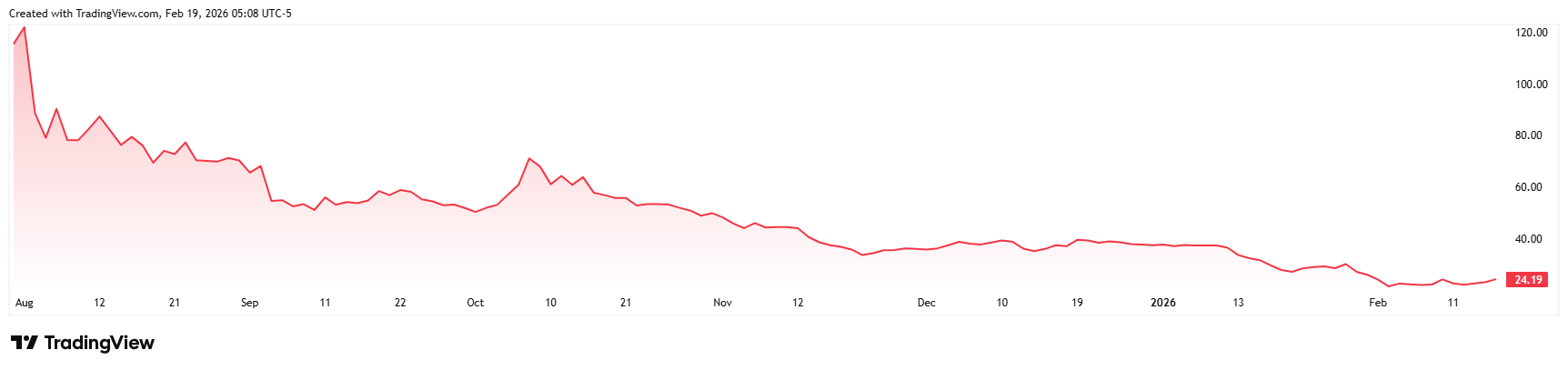
Performance of Figma’s share price since its IPO. Source: tradingview.com
Artificial intelligence
The company’s leadership primarily places its hopes for revival in the successful implementation of artificial intelligence through the Figma Make tool. This assistant, utilizing models from leading players such as Google and Anthropic, enables users to generate functional prototypes of applications and websites directly from text prompts. From an investment perspective, it is crucial that the popularity of this solution is also reflected in fundamental figures – the number of weekly active users of AI tools increased by 70 percent compared to the previous quarter. Ultimately, however, planned monetization is far more important. From March, Figma will introduce a system of AI credits and usage-based pricing, which should transform high user interest into sustainable revenues while maintaining a high gross margin of 86 percent.
Customer loyalty in a competitive environment
Moreover, one of the strongest arguments for Figma’s long-term success is its ability to retain large clients and motivate them to increase spending. The Net Dollar Retention (NDR) metric among customers with annual revenues above 10,000 USD rose to 136%. In practice, this means that the same group of companies spent 36% more money this year than last year. According to CNBC, Figma is also successfully expanding beyond its traditional community of designers and, thanks to a strategic partnership with ServiceNow, is becoming an important tool for product managers in large corporations.
What comes next?
Although Dylan Field admits that the market is saturated with competition, Figma demonstrates that it can find its path to customers even in this environment. The strategic shift toward paid AI features and the expansion of its target group also suggest that Figma is no longer just a simple drawing canvas, but a comprehensive operating system for digital creation. In the near future, it will therefore be crucial whether the company manages to leverage its strong product and clear strategy in the field of artificial intelligence and thereby overcome accounting losses and the skeptical market sentiment.[1]
*Past performance is not a guarantee of future results.
[1] Forward-looking statements are based on assumptions and current expectations that may be inaccurate or based on the current economic environment, which may change. Such statements are not a guarantee of future performance. They involve risks and other uncertainties that are difficult to predict. Results may differ materially from those expressed or implied in any forward-looking statements.
