









1. Puma
The efforts of the German sportswear and footwear manufacturer in the areas of climate, forest protection and water security have also been recognised by the CDP organisation. Through its PUMA x First Mile eco collection, the company transforms recycled polyester from plastic bottles sourced from community waste collectors, thereby reducing plastic consumption and contributing to improving conditions in communities. It gradually wants to integrate sustainability into all aspects of its production – from product design to sourcing raw materials.
Although the value of its shares has experienced a significant correction from its highs, since its stock market debut it has achieved a performance of almost 1,000 percent.* The reason for the current correction is the withdrawal from less attractive sales channels and business relationships that were perceived as damaging to the brand or generating low margins. The result is a decline in wholesale revenues – in the first half of 2026, which was also reflected in the company's market value on the stock exchange.* The company plans to return to a growth scenario in 2027, which could be a positive impulse for including this asset in an investment portfolio.[1]
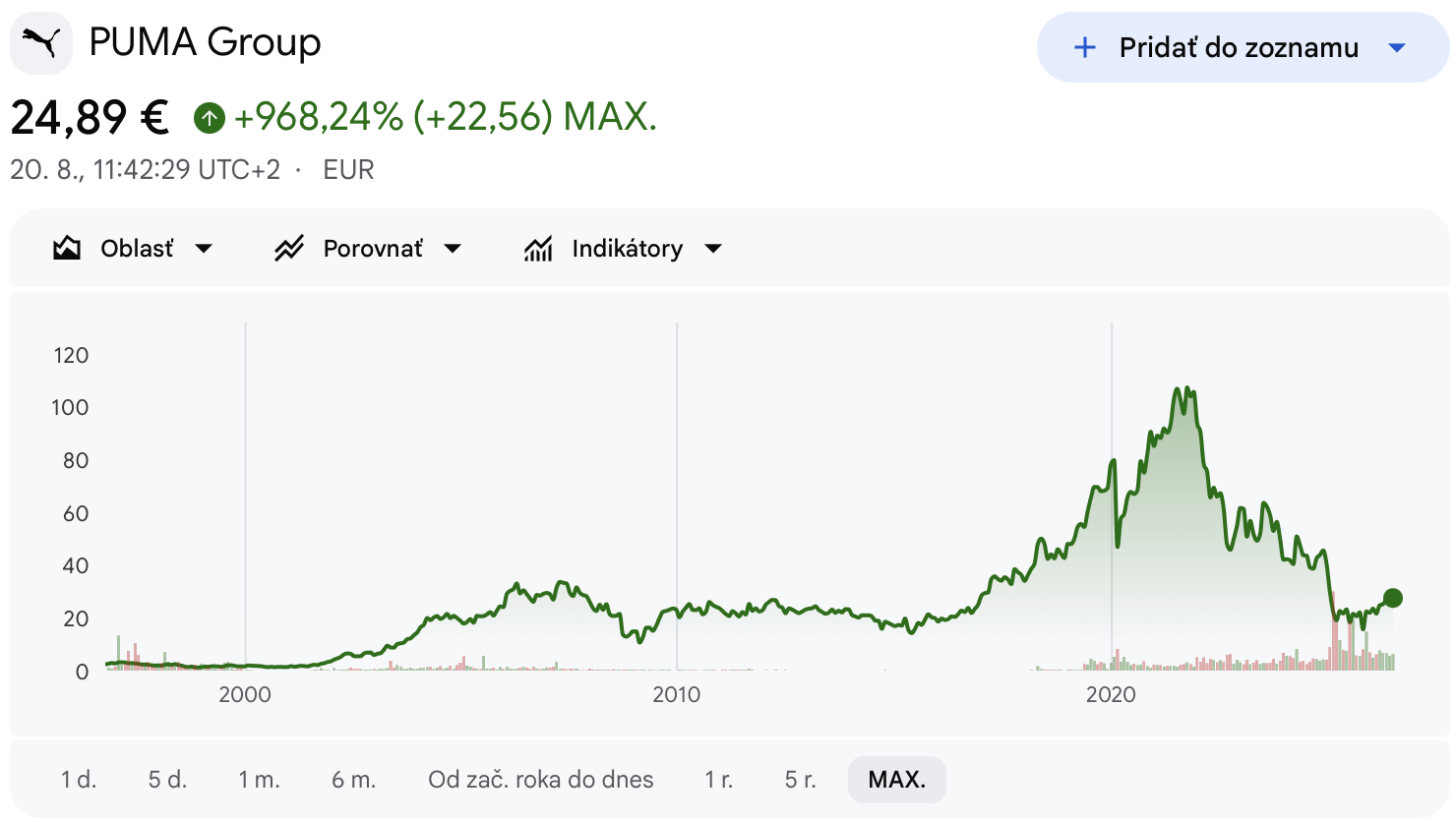
Chart: Development of the value of Puma Group since its stock market debut. (Source: Google Finance) *
2. Adidas
The company is a founding member of initiatives focused on a more sustainable apparel industry, including Better Cotton, the Fair Labor Association and Leather Working. In its products, the company uses recycled or sustainably sourced renewable materials, 100 percent certified cotton and 99 percent polyester from recycled sources.
By 2023, the company had set a target for 10 percent of polyester to come from recycled textile waste as part of the textile-to-textile principle. The first products should be launched as early as this year. In addition, in order to protect the environment, it is also trying to use vegan materials and organic cotton, as well as more environmentally friendly fabric-dyeing methods, with the aim of reducing the burden on water resources and its carbon footprint.
Although the company's shares are in the red when looking at their 5-year performance and have also declined recently due to weaker financial results and the absence of an increased earnings outlook, which made investors nervous, as well as the costs of the FIFA World Cup, which reached EUR 924 million (approximately EUR 212 million higher than the previous year) without a more significant reflection of this investment in profit, which brought disappointment, the shares have nevertheless gained more than 280 percent overall since their stock market debut. Therefore, from a short-term perspective, the company's shares may not be the right “cup of tea”, but for long-term investors who believe in further growth of the company, such an investment certainly makes sense.*
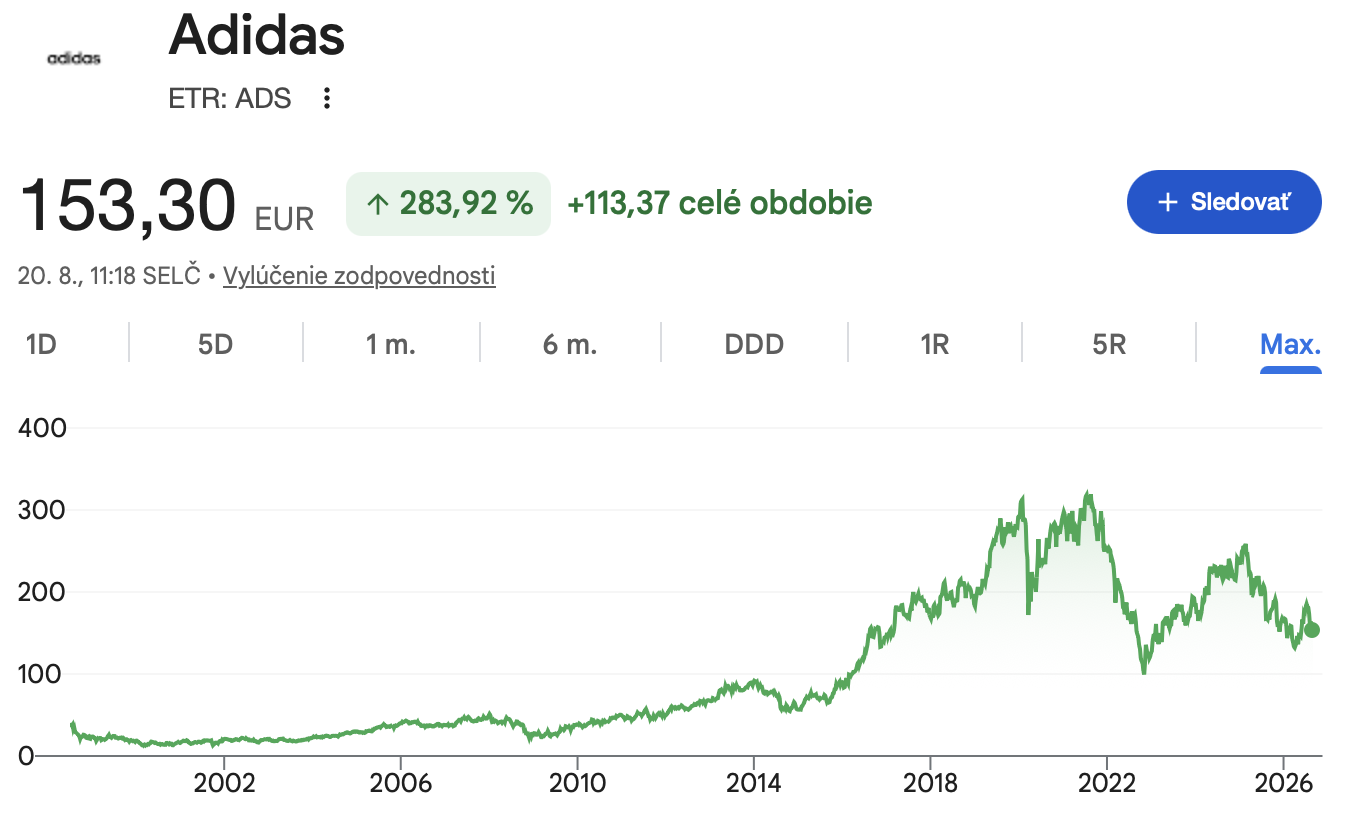
Chart: Development of the value of Adidas since its stock market debut. (Source: Google Finance) *
Who doesn't know the slogan Move to Zero, which has been an inseparable part of Nike's journey towards zero carbon emissions and zero waste for years, through which it aims to protect the future of sport. But did you know that all waste within Nike's extended supply chain is diverted from landfill and at least 80% of it is recycled back into the brand's products or other products? I personally own a pair of trainers made from recycled materials from this brand, and in my free time they are my favourite piece of footwear.
The company combines innovative technologies, recycled materials and sustainable design. In practice, this means that it uses recycled materials such as plastic bottles, textile scraps and old clothing in production. It minimises single-use packaging, which it seeks to replace with more sustainable alternatives, and a number of Nike factories and centres already use renewable energy sources. And, of course, we must not forget about circular fashion – the company invests in the development of products that can be easily recycled or reused.
The company's shares are currently at a 12-year low due to strong competition from Adidas, Hoka and New Balance, declining revenues in China, which is an important market for the company, and although CEO Elliott Hill is trying to return Nike to growth, the results are coming slowly. On the other hand, although Nike is currently not exactly among the favourites of the investment world, it could be an interesting addition to an investment portfolio for more adventurous investors and a potential opportunity to buy shares at a “significant discount”.*
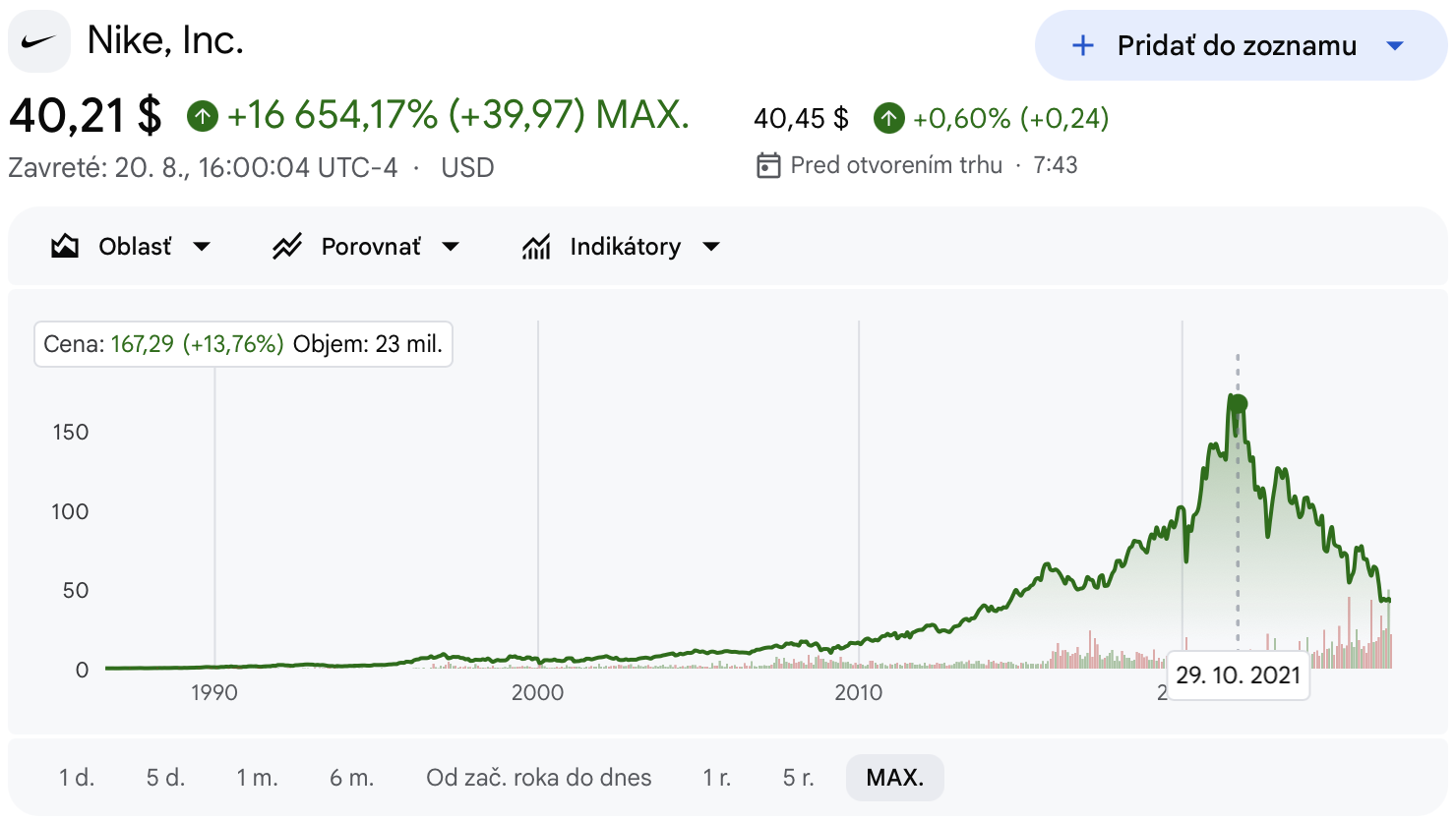
Chart: Development of the value of Nike since its stock market debut. (Source: Google Finance) *
Future Outlook
Growing competition, an emphasis on sustainability and the transformation of processes towards zero emissions are relatively challenging journeys, as can also be seen in the development of the value of the selected shares on the market. Despite short-term declines, however, the shares of all three companies are in positive territory from a long-term perspective, and therefore investing in them may be an interesting addition for investors for whom sustainable investments are an important part of their portfolio over a long-term time horizon.[2]
* Past performance is not a guarantee of future results.
*[1,2] Forward-looking statements are based on assumptions and current expectations, which may be inaccurate, or on the current economic environment, which may change. Such statements are not a guarantee of future performance. They involve risks and other uncertainties that are difficult to predict. Results may differ materially from the results expressed or implied in any forward-looking statements.
