Alcohol Consumption Is Declining. Is Gen Z Really to Blame?

In recent years, reducing alcohol consumption has become an increasingly prominent trend. It is supposedly most noticeable among Generation Z, which is said to be actively avoiding this “bad habit” and replacing alcoholic drinks with fermented beverages such as kombucha and kefir. But is this really the case? What do the actual data tell us, and what is the real impact on the alcohol industry?
A decline in alcohol consumption can be observed worldwide. According to an official analysis by International Wine and Spirit Research (IWSR) published in June 2026, global wine sales volume fell by 5 percent in 2025, beer volume declined by 2 percent, and global spirits volume dropped by 3 percent. This marks the third consecutive decline. In contrast, the global volume of non-alcoholic beer increased by 8 percent.

Lower Interest and Higher Prices

Although Generation Z is often described as the main driver of the abstinence trend, supposedly representing the first generation to prefer non-alcoholic beverages, the data do not support this claim. Quite the opposite: the figures show that Gen Z consumes almost as much alcohol as the rest of the population. According to figures from the Bevtrac consumer survey, the rate of alcohol consumption among adults from Generation Z across 15 tracked markets stood at 74 percent. The figure was 81 percent among millennials, 77 percent among Generation X, and 71 percent among baby boomers. The current decline in the purchase and consumption of alcoholic beverages therefore spans all generations. Almost half of alcohol consumers say they are less interested in alcohol than they used to be. Interestingly, more than one-third of people who drink less alcohol in 2026 than they did in the past cite higher alcohol prices as the main reason.

Other Reasons Behind the Decline

Another reason why some consumers have begun avoiding alcoholic drinks is the growing awareness on social media and in podcasts of the actual effects alcohol has on the human body. While a glass of red wine with dinner was once recommended as beneficial for red blood cells, current studies show that drinking alcohol before bed can significantly disrupt sleep quality and the body's subsequent recovery. Increased attention is also being paid to the fact that alcohol is carcinogenic. The World Health Organization has repeatedly warned that there is no safe level of alcohol consumption for our bodies. Many well-known public figures have even spoken openly about voluntarily choosing abstinence.

How Are the Czech Republic and Slovakia Doing?

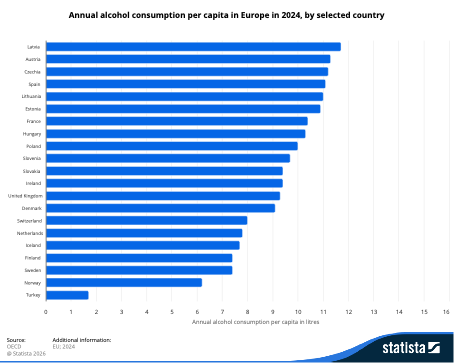
According to figures from Statista, average annual alcohol consumption per person in Slovakia stood at 9.4 litres in 2024. By comparison, average annual consumption in the Czech Republic was 11.2 litres per person. The country ranked third, just behind Latvia and Austria, which topped the ranking of European countries with the highest alcohol consumption. However, the average Slovak will consume one-quarter less alcohol in 2026 than in 2020. Manufacturers must therefore find new and creative ways to offset this decline.
Spotreba alkoholu

Chart: Annual alcohol consumption per person in European countries in 2024.

Market Value Continues to Grow

Despite the facts outlined above, the value of the alcoholic beverages market continues to grow. A lower sales volume does not necessarily mean lower revenue. In 2025, the alcohol market was worth more than USD 2.5 billion, with beer accounting for the largest segment. Fortune Business Insights estimates that the market will be worth USD 2.7 billion in 2026 and projects growth to as much as USD 4.3 billion by 2034. Growing health awareness, however, is putting pressure on the alcohol industry and may slow its growth. At the same time, it is creating opportunities for new startups offering non-alcoholic drinks (mocktails) or low-alcohol beverages for people who have decided to reduce their alcohol consumption and are looking for suitable alternatives.

This text constitutes marketing communication. It is not any form of investment advice or investment research or an offer for any transactions in financial instrument. Its content does not take into consideration individual circumstances of the readers, their experience or financial situation. The past performance is not a guarantee or prediction of future results.

🍪 Slapukai

Mes naudojame slapukus, kad galėtume saugoti, naudoti ir tvarkyti asmens duomenis, siekdami užtikrinti Jums geriausią interneto patirtį. Spausdami „Sutinku su slapukais“ Jūs sutinkate, kad būtų saugomi visi slapukai, ir užtikrinate geriausi Galite keisti slapukų nustatymus arba atšaukti sutikimą spustelėdami „Slapukų nustatymai“. Norėdami sužinoti daugiau apie slapukus ir jų tikslus, perskaitykite mūsų Slapukų politiką ir Privatumo pranešimą.

Cookies settings


Slapukų kontrolė

Kas yra slapukai?

Slapukai yra nedideli tekstiniai failai, kurie leidžia mums ir mūsų paslaugų teikėjams unikaliai identifikuoti jūsų naršyklę ar įrenginį. Slapukai paprastai veikia priskirdami jūsų įrenginiui unikalų numerį ir yra saugomi jūsų naršyklėje jūsų lankomų svetainių bei tų svetainių trečiųjų šalių paslaugų teikėjų. Terminas „slapukai“ apima ir kitas technologijas, pvz., SDK, pikselius ir vietinę saugyklą.


Jei įjungta

Mes galime atpažinti jus kaip klientą, o tai leidžia teikti individualizuotas paslaugas, turinį ir reklamą, užtikrinti paslaugų veiksmingumą ir atpažinti įrenginį, kad būtų užtikrintas didesnis saugumas. Mes galime pagerinti jūsų patirtį remdamiesi jūsų ankstesne sesija. Mes galime stebėti jūsų pageidavimus ir individualizuoti paslaugas.
Mes galime pagerinti svetainės veikimą.


Jei išjungta

Mes negalėsime prisiminti jūsų ankstesnių sesijų, todėl negalėsime pritaikyti svetainės pagal jūsų pageidavimus.
Be slapukų kai kurios funkcijos gali būti neprieinamos, o vartotojo patirtis gali pablogėti.


„Būtinai reikalingi“ reiškia, kad be jų negalima užtikrinti pagrindinių svetainės funkcijų. Kadangi šie slapukai yra būtini tinkamam svetainės funkcijų ir paslaugų veikimui bei saugumui užtikrinti, jūs negalite atsisakyti naudoti šias technologijas. Jūs vis tiek galite juos užblokuoti savo naršyklėje, tačiau tai gali sutrikdyti pagrindinių svetainės funkcijų veikimą.

  • Privatumo nustatymų konfigūravimas
  • Saugus prisijungimas
  • Saugus ryšys naudojantis paslaugomis
  • Formų pildymas

Analizės ir veiklos stebėjimo technologijos, skirtos analizuoti, kaip naudojatės Svetainę.

  • Dažniausiai peržiūrimos puslapiai
  • Sąveika su turiniu
  • Klaidų analizė
  • Įvairių projektų efektyvumo testavimas ir matavimas

Svetainė gali naudoti trečiųjų šalių reklamos ir rinkodaros technologijas.

  • Reklamuokite mūsų paslaugas kitose platformose ir svetainėse
  • Įvertinkite mūsų kampanijų veiksmingumą

Rizikos įspėjimas: CFD yra sudėtingi instrumentai ir dėl sverto jie kelia didelę riziką greitai prarasti pinigus. 74.25% mažmeninių investuotojų sąskaitų praranda pinigus prekiaudami CFD su šiuo teikėju. Turėtumėte apsvarstyti, ar suprantate, kaip veikia CFD, ir ar galite sau leisti prisiimti didelę riziką prarasti savo pinigus.