


Lower Interest and Higher Prices
Although Generation Z is often described as the main driver of the abstinence trend, supposedly representing the first generation to prefer non-alcoholic beverages, the data do not support this claim. Quite the opposite: the figures show that Gen Z consumes almost as much alcohol as the rest of the population. According to figures from the Bevtrac consumer survey, the rate of alcohol consumption among adults from Generation Z across 15 tracked markets stood at 74 percent. The figure was 81 percent among millennials, 77 percent among Generation X, and 71 percent among baby boomers. The current decline in the purchase and consumption of alcoholic beverages therefore spans all generations. Almost half of alcohol consumers say they are less interested in alcohol than they used to be. Interestingly, more than one-third of people who drink less alcohol in 2026 than they did in the past cite higher alcohol prices as the main reason.
Other Reasons Behind the Decline
Another reason why some consumers have begun avoiding alcoholic drinks is the growing awareness on social media and in podcasts of the actual effects alcohol has on the human body. While a glass of red wine with dinner was once recommended as beneficial for red blood cells, current studies show that drinking alcohol before bed can significantly disrupt sleep quality and the body's subsequent recovery. Increased attention is also being paid to the fact that alcohol is carcinogenic. The World Health Organization has repeatedly warned that there is no safe level of alcohol consumption for our bodies. Many well-known public figures have even spoken openly about voluntarily choosing abstinence.
How Are the Czech Republic and Slovakia Doing?
According to figures from Statista, average annual alcohol consumption per person in Slovakia stood at 9.4 litres in 2024. By comparison, average annual consumption in the Czech Republic was 11.2 litres per person. The country ranked third, just behind Latvia and Austria, which topped the ranking of European countries with the highest alcohol consumption. However, the average Slovak will consume one-quarter less alcohol in 2026 than in 2020. Manufacturers must therefore find new and creative ways to offset this decline.
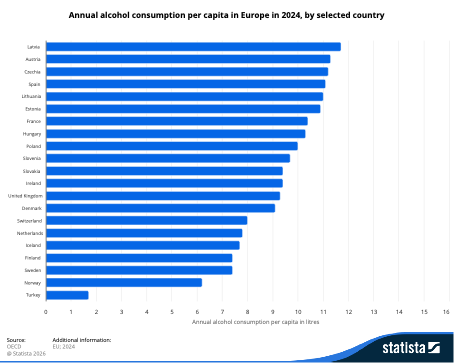
Chart: Annual alcohol consumption per person in European countries in 2024.
Market Value Continues to Grow
Despite the facts outlined above, the value of the alcoholic beverages market continues to grow. A lower sales volume does not necessarily mean lower revenue. In 2025, the alcohol market was worth more than USD 2.5 billion, with beer accounting for the largest segment. Fortune Business Insights estimates that the market will be worth USD 2.7 billion in 2026 and projects growth to as much as USD 4.3 billion by 2034. Growing health awareness, however, is putting pressure on the alcohol industry and may slow its growth. At the same time, it is creating opportunities for new startups offering non-alcoholic drinks (mocktails) or low-alcohol beverages for people who have decided to reduce their alcohol consumption and are looking for suitable alternatives.
