




Gold's Summer Sale Continues: An Opportunity to Buy at a Good Price?

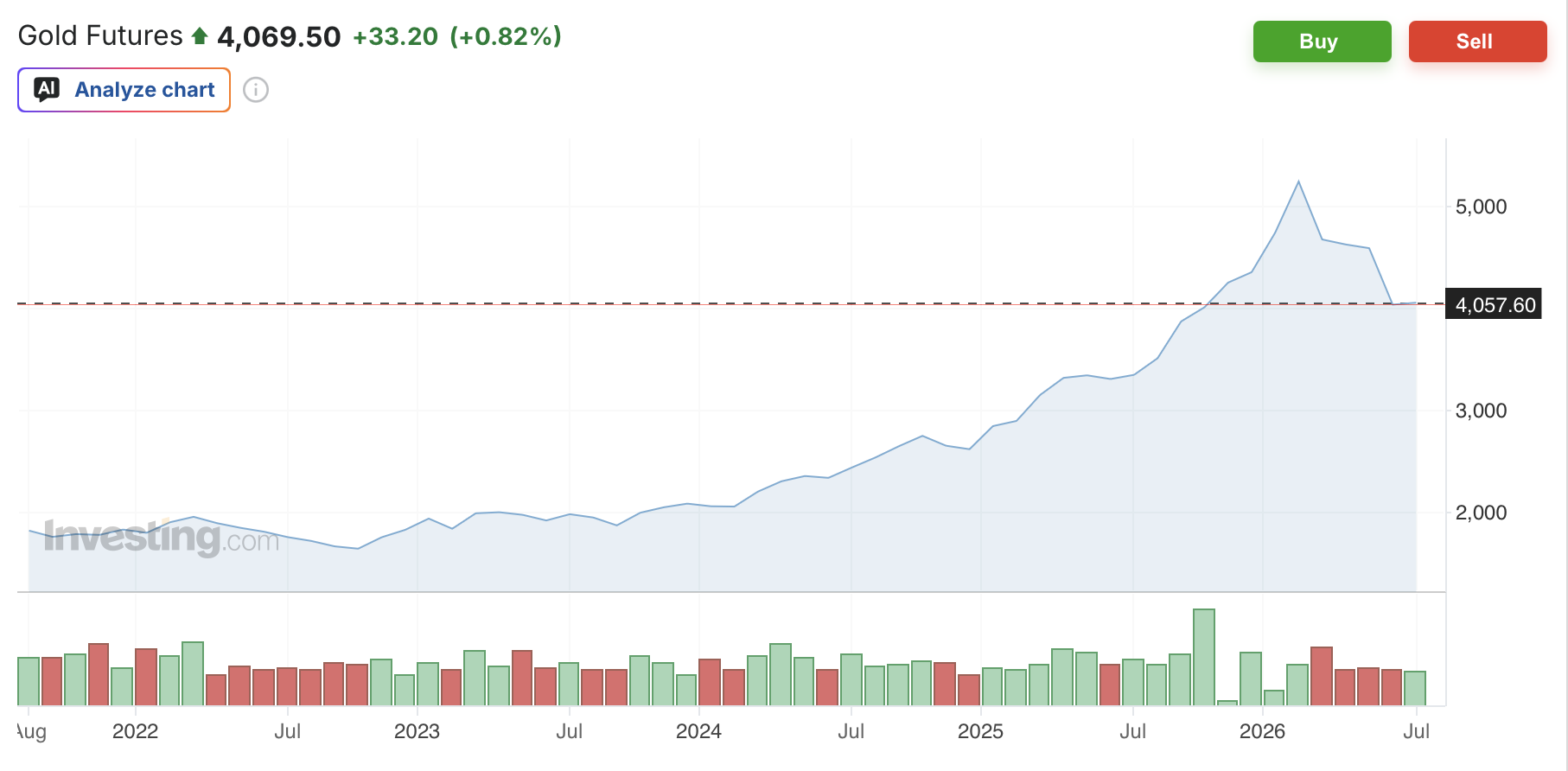
While gold futures reached an all-time high of more than USD 5,434 per troy ounce in March, the situation has changed significantly since then, with the king of precious metals losing more than a quarter of its value.* Gold has been in a bearish trend for some time now, and there are currently few signs that this direction will change in the near future. However, this certainly does not mean that gold no longer deserves a place in an investment portfolio. On the contrary.
It is only natural that investors are asking whether the current correction in the price of gold—which was trading above USD 4,000 per ounce on July 28, 2026—represents an attractive buying opportunity or merely the beginning of a deeper decline. It is important to remember that, besides serving as a safe-haven asset during periods of turbulence in the capital markets, gold is also an effective tool for portfolio diversification and a long-term investment that has historically delivered strong performance. Several factors support the scenario that the price of the king of precious metals could eventually reach USD 10,000 per ounce.[1]

Snímka obrazovky 2026-07-30 o 11.25.07

Chart: Gold futures price performance over the past five years. (Source: Investing.com) *

Central Bank Demand and Inflation Continue to Support Higher Gold Prices

Gold advocates—including myself—believe that the current price correction is only temporary because the macroeconomic factors that fueled the previous rally remain unchanged. What are these factors? Central banks continue to accumulate gold as an alternative to government bonds and fiat currencies. In the first quarter of 2026 alone, they added 244 tonnes to their reserves. Gold remains an effective hedge against currency-related risks. Another important factor is the heightened geopolitical uncertainty seen during the first half of the year, which has contributed to rising inflation expectations. The threat of inflation continues to encourage many investors to buy gold as a reliable store of value. Additional bullish drivers include growing government debt levels and the increasing cost of servicing that debt.

Gold Miners Continue to Perform Well

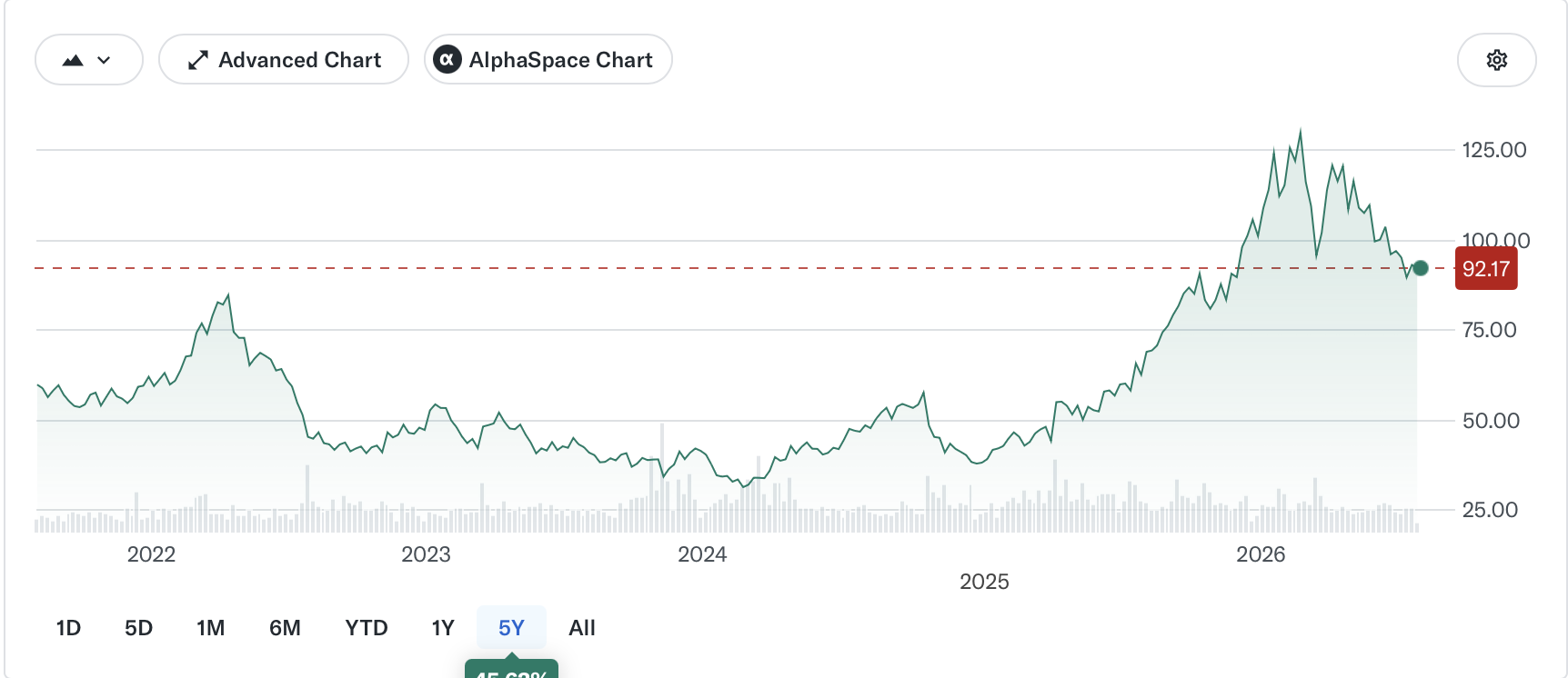
According to Bank of America, despite the correction in the price of gold itself, gold producers currently rank among the most profitable sectors in the U.S. market. Since 2020, their free cash flow has increased tenfold, average yields have reached 12%, and the ratio of long-term debt to equity has been cut in half. The world's largest gold producer is Newmont Corporation. Although its shares have experienced a modest pullback in recent months, both one-year and five-year performance remain firmly in positive territory.*
Snímka obrazovky 2026-07-30 o 12.55.46

Share price performance of Newmont Corporation over the past five years. (Source: Yahoo Finance) *

Outlook for Gold Prices

Personally, I believe that by the end of 2026 gold could reach another important milestone by surpassing USD 6,000 per ounce. This view is also supported by J.P. Morgan Global Research, which expects gold to climb to as much as USD 6,300 per ounce in 2027. Yahoo further forecasts that by the end of 2030, the price of the king of precious metals could range between USD 7,000 and USD 10,000 per ounce.[2]

What Comes Next?

Based on the factors outlined above, the current "summer sale" in gold prices may represent an attractive buying opportunity. This does not mean, however, that gold prices cannot continue to decline in the short term. Rather, it highlights the fact that waiting for the perfect entry point is rarely worthwhile. Even experienced investors and traders find it extremely difficult to identify the exact market bottom before prices reverse. The coming weeks and months will largely depend on central bank interest rate decisions, developments in the Middle East, inflation trends, and whether central banks continue adding gold to their reserves. From a long-term perspective, however, gold remains an excellent addition to a diversified investment portfolio with significant appreciation potential.[3]

* Past performance is not a reliable indicator of future results.

[1,2,3] Forward-looking statements are based on assumptions and current expectations that may prove to be inaccurate or on current economic conditions that may change. Such statements do not guarantee future performance and involve risks and uncertainties that are difficult to predict. Actual results may differ materially from those expressed or implied in any forward-looking statements.

Photo: Pixabay

Dieser Text stellt eine Marketingmitteilung dar. Er stellt keine Form der Anlageberatung oder Anlageforschung oder ein Angebot für Transaktionen mit Finanzinstrumenten dar. Sein Inhalt berücksichtigt nicht die individuellen Umstände des Lesers, seine Erfahrung oder seine finanzielle Situation. Die Wertentwicklung in der Vergangenheit ist keine Garantie oder Vorhersage für zukünftige Ergebnisse.

🍪 Cookies

Wir verwenden Cookies, um personenbezogene Daten zu speichern, darauf zuzugreifen und zu verarbeiten, um Ihnen das bestmögliche Online-Erlebnis zu bieten. Durch Klicken auf "Cookies akzeptieren" stimmen Sie zu, dass alle Cookies gespeichert werden und eine optimale Website-Leistung gewährleistet ist. Sie können die Cookie-Einstellungen ändern oder die Zustimmung widerrufen, indem Sie auf "Cookie-Einstellungen" klicken. Weitere Informationen zu Cookies und Zwecken finden Sie in unserer Cookie-Richtlinie und Datenschutzerklärung.

Cookie-Einstellungen


Cookie-Steuerung

Was sind Cookies?

Cookies sind kleine Textdateien, die es uns und unseren Dienstleistern ermöglichen, Ihren Browser oder Ihr Gerät einmalig zu identifizieren. Cookies funktionieren in der Regel so, dass sie Ihrem Gerät eine eindeutige Nummer zuweisen und von den Websites, die Sie besuchen, sowie von Drittanbietern für diese Websites in Ihrem Browser gespeichert werden. Unter dem Begriff Cookies sind auch andere Technologien wie SDKs, Pixel und lokale Speicherung zu verstehen.


Wenn aktiviert

Wir können Sie als Kunden erkennen und das ermöglicht maßgeschneiderte Dienste, Inhalte und Werbung, die Effektivität von Diensten und die Geräteerkennung für mehr Sicherheit.
Wir können Ihr Erlebnis ausgehend von Ihrer vorherigen Sitzung verbessern
Wir können Ihre Präferenzen verfolgen und Dienste personalisieren
Wir können die Leistung der Website verbessern.


Wenn deaktiviert

Wir behalten nicht Ihre früheren Sitzungen, was es uns nicht ermöglicht, die Website auf Ihre Präferenzen zuzuschneiden.
Einige Funktionen sind möglicherweise nicht verfügbar und die Benutzerfreundlichkeit ist ohne Cookies eingeschränkt


Unbedingt erforderlich bedeutet, dass wesentliche Funktionen der Website ohne die Verwendung dieser Cookies nicht verfügbar werden können. Da diese Cookies für das ordnungsgemäße Funktionieren und die Sicherheit der Funktionen und Dienste der Website unerlässlich sind, können Sie sich nicht gegen die Verwendung dieser Technologien entscheiden. Sie können sie zwar in Ihrem Browser blockieren, aber das kann dazu führen, dass wesentliche Funktionen der Website nicht mehr funktionieren.

  • Einstellung der Datenschutzeinstellungen
  • Sicheres Einloggen
  • Sichere Verbindung während der Nutzung der Dienste
  • Ausfüllen von Formularen

Analyse- und Leistungsverfolgung Technologien, um zu analysieren, wie Sie die Website nutzen.

  • Meistbesuchte Seiten
  • Interaktion mit Inhalten
  • Fehleranalyse
  • Testen und Messen verschiedener Design-Effektivität

Die Website kann Werbe- und Marketingtechnologien Dritter verwenden.

  • Unterstützen Sie unsere Dienstleistungen auf anderen Plattformen und Websites
  • Messen Sie die Wirksamkeit unserer Kampagnen

Risikowarnung: CFDs sind komplexe Instrumente und bergen aufgrund der Hebelwirkung ein hohes Risiko, schnell Geld zu verlieren. 73.31% der Konten von Kleinanlegern verlieren Geld beim Handel mit CFDs bei diesem Anbieter. Sie sollten abwägen, ob Sie die Funktionsweise von CFDs verstehen und ob Sie es sich leisten können, das hohe Risiko einzugehen, Ihr Geld zu verlieren.