Alcohol Consumption Is Declining. Is Gen Z Really to Blame?

In recent years, reducing alcohol consumption has become an increasingly prominent trend. It is supposedly most noticeable among Generation Z, which is said to be actively avoiding this “bad habit” and replacing alcoholic drinks with fermented beverages such as kombucha and kefir. But is this really the case? What do the actual data tell us, and what is the real impact on the alcohol industry?
A decline in alcohol consumption can be observed worldwide. According to an official analysis by International Wine and Spirit Research (IWSR) published in June 2026, global wine sales volume fell by 5 percent in 2025, beer volume declined by 2 percent, and global spirits volume dropped by 3 percent. This marks the third consecutive decline. In contrast, the global volume of non-alcoholic beer increased by 8 percent.

Lower Interest and Higher Prices

Although Generation Z is often described as the main driver of the abstinence trend, supposedly representing the first generation to prefer non-alcoholic beverages, the data do not support this claim. Quite the opposite: the figures show that Gen Z consumes almost as much alcohol as the rest of the population. According to figures from the Bevtrac consumer survey, the rate of alcohol consumption among adults from Generation Z across 15 tracked markets stood at 74 percent. The figure was 81 percent among millennials, 77 percent among Generation X, and 71 percent among baby boomers. The current decline in the purchase and consumption of alcoholic beverages therefore spans all generations. Almost half of alcohol consumers say they are less interested in alcohol than they used to be. Interestingly, more than one-third of people who drink less alcohol in 2026 than they did in the past cite higher alcohol prices as the main reason.

Other Reasons Behind the Decline

Another reason why some consumers have begun avoiding alcoholic drinks is the growing awareness on social media and in podcasts of the actual effects alcohol has on the human body. While a glass of red wine with dinner was once recommended as beneficial for red blood cells, current studies show that drinking alcohol before bed can significantly disrupt sleep quality and the body's subsequent recovery. Increased attention is also being paid to the fact that alcohol is carcinogenic. The World Health Organization has repeatedly warned that there is no safe level of alcohol consumption for our bodies. Many well-known public figures have even spoken openly about voluntarily choosing abstinence.

How Are the Czech Republic and Slovakia Doing?

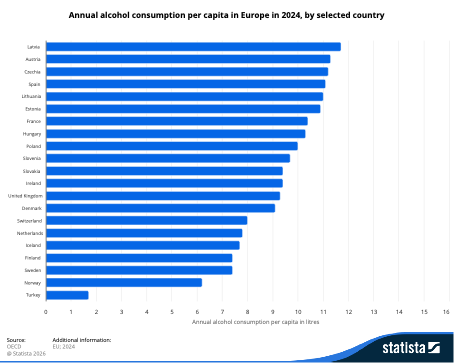
According to figures from Statista, average annual alcohol consumption per person in Slovakia stood at 9.4 litres in 2024. By comparison, average annual consumption in the Czech Republic was 11.2 litres per person. The country ranked third, just behind Latvia and Austria, which topped the ranking of European countries with the highest alcohol consumption. However, the average Slovak will consume one-quarter less alcohol in 2026 than in 2020. Manufacturers must therefore find new and creative ways to offset this decline.
Spotreba alkoholu

Chart: Annual alcohol consumption per person in European countries in 2024.

Market Value Continues to Grow

Despite the facts outlined above, the value of the alcoholic beverages market continues to grow. A lower sales volume does not necessarily mean lower revenue. In 2025, the alcohol market was worth more than USD 2.5 billion, with beer accounting for the largest segment. Fortune Business Insights estimates that the market will be worth USD 2.7 billion in 2026 and projects growth to as much as USD 4.3 billion by 2034. Growing health awareness, however, is putting pressure on the alcohol industry and may slow its growth. At the same time, it is creating opportunities for new startups offering non-alcoholic drinks (mocktails) or low-alcohol beverages for people who have decided to reduce their alcohol consumption and are looking for suitable alternatives.

Este texto es una comunicación de marketing. No se trata de ningún tipo de asesoramiento o prospección de inversión ni de una oferta de transacción de ningún instrumento financiero. El contenido del texto no tiene en cuenta las circunstancias individuales, la experiencia o la situación financiera del lector. Eficacias pasadas no son garantía ni predicción de resultados futuros.

🍪 Cookies

Usamos cookies para almacenar, acceder y procesar datos personales para brindarle la mejor experiencia en línea. Al hacer clic en Aceptar cookies, acepta almacenar todas las cookies y garantizar el mejor rendimiento del sitio web. Puede modificar las preferencias de cookies o retirar el consentimiento haciendo clic en Configuración de cookies. Para obtener más información sobre cookies y propósitos, lea nuestra Política de cookies y Aviso de Privacidad.

Configuración de cookies


Control de cookies

¿Qué son las cookies?

Las cookies son pequeños archivos de texto que nos permiten y nuestro servicio proporciona identificar de forma única su navegador o dispositivo. Las cookies normalmente funcionan asignando un número único a su dispositivo y los sitios web que visita, así como los proveedores de servicios externos para esos sitios web, las almacenan en su navegador. Con el término cookies se deben considerar otras tecnologías como SDK, píxeles y almacenamiento local.


Si está habilitado

Podemos reconocerlo como un cliente que permite servicios, contenido y publicidad personalizados, efectividad de los servicios y reconocimiento de dispositivos para una mayor seguridad
Podemos mejorar su experiencia en función de su sesión anterior
Podemos realizar un seguimiento de sus preferencias y personalizar los servicios
Podemos mejorar el rendimiento del sitio web.


Si no está habilitado

No podremos recordar sus sesiones anteriores, eso no nos permitirá adaptar el sitio web a sus preferencias
Es posible que algunas funciones no estén disponibles y que la experiencia del usuario se reduzca sin cookies


Estrictamente necesario significa que las funciones esenciales del sitio web no se pueden proporcionar sin usarlas. Debido a que estas cookies son esenciales para el correcto funcionamiento y la seguridad de las funciones y servicios del sitio web, no puede optar por no utilizar estas tecnologías. Aún puede bloquearlos dentro de su navegador, pero podría causar la disfunción de las funciones básicas del sitio web.

  • Establecer preferencias de privacidad
  • Iniciar sesión segura
  • Conexión segura durante el uso de servicios
  • Llenado de formularios

Tecnologías de análisis y seguimiento del rendimiento para analizar cómo utiliza el sitio web.

  • Paginas mas visitadas
  • Interacción con el contenido
  • Análisis de errores
  • Prueba y medición de la efectividad de varios diseños

El sitio web puede utilizar tecnologías de marketing y publicidad de terceros.

  • Promocionar nuestros servicios en otras plataformas y sitios web
  • Medir la efectividad de nuestras campañas

Advertencia de riesgo: Los CFD son instrumentos complejos y están asociados a un riesgo elevado de perder dinero rápidamente debido al apalancamiento. 74.25% de las cuentas de inversores minoristas pierden dinero en la negociación de CFD con este proveedor Debe considerar si comprende el funcionamiento de los CFD y si puede permitirse asumir un riesgo elevado de perder su dinero. Producto difícil de comprender, la CNMV ha determinado que no es adecuado para los pequeños inversores, debido a la complejidad y alto riesgo que implica.